

 Facebook
 X
X
 Pinterest
 Copy Link
Move-Up Buyers in Lincoln NE: Finding the Home Worth Moving For

By Kathy Ley, REALTOR® GRI, CLHMS | Coldwell Banker NHS Real Estate | Lincoln, Nebraska | July 2026
Move-up buyers are usually not casual shoppers.
They may scroll listings. They may save a few homes. They may wander through an open house on a Sunday afternoon, quietly comparing the kitchen, the garage, the basement, the light, the storage, the way the rooms connect.
But most of the time, they are not looking for just any home.
They are looking for the one that makes the effort worth it.
Because moving up is different from buying the first time. The first home often comes with excitement and compromise. You stretch a little. You make things work. You learn what matters by living inside the walls, through ordinary mornings, busy evenings, holidays, storms, laundry days, guests, pets, projects, and all the seasons a home quietly carries.
By the time you become a move-up buyer, you know more.
You know what kind of kitchen actually works. You know whether a formal dining room fits your life. You know how much storage is enough. You know what a small garage feels like in January. You know the difference between a finished basement that looks nice and one that truly lives well.
That experience is an advantage.
It also makes you more selective.
Move-Up Buyers Are Buying Improvement, Not Just Space
A move-up home does not always mean the biggest home.
It means a better-fitting home.
For some Lincoln buyers, that may mean more bedrooms or more finished square footage. For others, it may mean a ranch floor plan, a larger garage, a better kitchen, a real home office, a walk-in pantry, a covered deck, or a basement that can comfortably hold guests, hobbies, exercise equipment, teenagers, grandkids, or Husker Saturdays.
The goal is not simply to buy “more.”
The goal is to buy relief.
Relief from the awkward corner that became an office. Relief from carrying laundry up and down stairs. Relief from the garage that never quite holds what life requires. Relief from a layout that worked beautifully ten years ago but now feels a little out of rhythm.
That is why the best move-up question is not, “Can we afford a more expensive home?”
A better question is:
What would our next home need to make daily life noticeably better?
If you are still in the early wondering stage, my Stay or Go decision guide can help you think through whether staying, improving, or moving up makes the most sense for your next season.
The Next Home Has to Earn the Move
Moving takes energy. There are boxes, appointments, decisions, documents, inspections, repairs, showings, timing questions, and moments when the whole process feels bigger than expected.
So the next home has to earn that effort.
For many move-up buyers in Lincoln, especially in South Lincoln and 68516, that means the home needs to offer something the current home cannot easily provide.
Maybe it is a main-floor office with a door that closes.
Maybe it is a kitchen where people can gather without standing shoulder to shoulder.
Maybe it is a primary suite that feels more private.
Maybe it is a basement that finally works for guests and gatherings.
Maybe it is a larger garage, better storage, or outdoor space that feels usable instead of high-maintenance.
Lincoln’s lifestyle matters here, too. The City of Lincoln Parks and Recreation Department manages 168 parks and 185.9 miles of trails, which means location is not only about commute time. It is also about how easily your next home connects to walks, recreation, errands, work, friends, family, and the routines that make a neighborhood feel like home.
A strong move-up home should improve both the inside life and the outside rhythm.
If you are beginning to compare options, browsing Lincoln homes for sale can help you see what kinds of spaces, layouts, and price points are available right now.
What Move-Up Buyers Tend to Notice First
Move-up buyers often see homes differently because they are bringing lived experience with them.
They notice where coats would land.
They notice whether the pantry will actually function.
They notice if the basement feels bright or tucked away.
They notice garage depth, driveway space, cabinet storage, laundry location, natural light, and whether guests would feel comfortable.
They also notice what may need attention right away.
That does not mean every home needs to be perfect. But move-up buyers are often balancing two homes in their minds: the one they already own and the one they are considering. If the next home does not solve enough of the current frustrations, it may be hard to justify the move.
That is why a simple priority list matters.
Before touring seriously, move-up buyers should sort wants into three categories:
Must improve: the things that have to be better than the current home.
Would appreciate: the features that would be nice but not essential.
Not worth moving for: the features that look attractive but do not actually change daily life.
That last category is important.
A beautiful feature is only valuable if it supports the way you live.
The Current Home Is Part of the Buying Plan
For move-up buyers who also have a home to sell, the current home is not just the place they are leaving.
It is part of the financial bridge to the next one.
The National Association of REALTORS® reported that among repeat buyers, 54% used proceeds from selling a previous home to help finance their next purchase. That is a major reason move-up planning is different from first-time buying. The purchase and the sale are connected. (National Association of REALTORS®)
This is where move-up buyers need clarity before emotion takes over.
Before falling in love with the next home, it helps to understand:
- What your current home may realistically sell for
- How much equity you may be able to use
- What prep would make your home more appealing
- Whether you can buy before selling
- Whether selling first would feel safer
- How much payment change still feels comfortable
- What type of offer structure would be realistic
A move-up buyer is really making two decisions at once: how to leave well and how to land well.
If you want a clearer starting point, you can begin by checking your current home value in Lincoln, NE. It will not answer every question, but it can help you understand what your current home may contribute to the next one.
Financing Should Be Compared, Not Assumed
Move-up buyers often have more financial pieces to consider than they did the first time around.
There may be equity, a current mortgage payoff, a larger down payment, a higher purchase price, bridge options, temporary housing questions, a rate lock, or the possibility of carrying two homes for a short period of time.
This is why it is helpful to compare options instead of guessing.
The Consumer Financial Protection Bureau’s Loan Estimate Explainer is a useful resource because it explains how buyers can compare loan terms, costs, and payment details across lenders.
For move-up buyers, the goal is not just getting approved.
The goal is understanding what each option does to your cash, comfort, timing, and stress level.
Sometimes the “best” option on paper may not be the calmest option in real life. A slightly different structure may protect your reserves, simplify timing, or make the transition feel less tight.
That is why a good move-up plan looks at both numbers and nerves.
For additional local context, this recent market article, Should You Buy or Sell in Lincoln Right Now? Here’s What the Market Is Telling Us, can help you understand what is happening in the current Lincoln market before you make a bigger move-up decision.
The Move-Up Buyer’s Most Common Questions
The questions usually start quietly, sometimes long before someone is ready to make a move.
Should we sell first or buy first?
That depends on your equity, financing, comfort level, and how specific your next-home needs are. Selling first can create a clearer budget, while buying first can give you more control over where you land. Many move-up buyers benefit from mapping both options before choosing a sequence.
How do we know if a home is worth moving for?
A home is worth considering if it solves meaningful problems your current home cannot easily solve. Better flow, more useful space, stronger storage, main-floor function, garage capacity, outdoor living, or long-term comfort can all make a move feel worthwhile.
What should we do before touring move-up homes?
Start by reviewing your current home’s likely value, your equity position, your financing options, and your top five non-negotiables. That way, each showing becomes a clearer comparison instead of an emotional guess.
Should we update our current home before selling?
Sometimes, yes — but not every update is worth doing. The best prep choices are the ones that help buyers understand the home quickly, feel confident about condition, and picture daily life there.
What if we are not ready to move yet?
That is okay. Many move-up buyers start with planning months before they act. Clarity now can make the eventual decision calmer, whether you move soon, wait, or decide to stay longer.
If these questions feel familiar, a move-up planning conversation can help you sort through timing, equity, prep, financing, and next-home options without feeling pressured to decide before you are ready.
A Simple Move-Up Buyer Audit
Before you start touring seriously, walk through your current home with fresh eyes.
Not critical eyes. Honest ones.
Notice where your home still works beautifully. Notice where daily life feels heavier than it needs to. Notice which spaces you use constantly and which spaces mostly sit untouched.
Then ask:
- What are we working around every week?
- What would we not want to repeat in the next home?
- What would make our days feel easier?
- What would we pay more for because it would genuinely improve life?
- What looks nice online but would not really matter to us?
Those answers become your move-up filter.
They help you avoid chasing someone else’s version of a dream home.
Moving Up Is Really About Moving Forward
The best move-up buyers are not trying to buy the most impressive home.
They are trying to buy the right next home.
A home that fits the morning routine.
A home that gives people room to gather and room to retreat.
A home that makes storage easier, work quieter, guests more comfortable, and weekends feel a little less crowded.
In Lincoln, that next home may be a ranch in South Lincoln, a newer home in 68516, a house with a finished basement and a larger garage, or a home closer to the trails, parks, and everyday places that shape your life.
The address matters.
But the fit matters more.
And when the fit is right, the move starts to feel less like disruption and more like alignment.
Not rushed.
Not forced.
Just thoughtfully planned.
That is what a good move-up decision should feel like.
If you are beginning to wonder whether your current home still fits — or what kind of next home would truly be worth the move — you can schedule a move-up planning conversation. No pressure. Just a clearer plan.
Kathy Ley is a REALTOR® GRI, CLHMS with Coldwell Banker NHS Real Estate, 4230 Pioneer Woods Dr., Suite A, Lincoln, NE 68506. She specializes in luxury homes, new construction, and relocation.
Lincoln NE Real Estate Market Update: What April 2026 Numbers Mean for Buyers and Sellers

Lincoln NE Real Estate Market Update: A Steady Market Where Pricing Still Matters
By Kathy Ley, REALTOR® with Coldwell Banker NHS Real Estate in Lincoln, Nebraska
There is something familiar about the spring real estate market in Lincoln. The trees fill in, yards turn green almost overnight, and the conversation around homes starts to feel a little more immediate. People who spent the winter quietly wondering whether this might be the year to move begin looking at numbers, neighborhoods, mortgage payments, and timing.
But the Lincoln, Nebraska real estate market in 2026 is not quite the same market many buyers and sellers remember from a few years ago.
It is still competitive. It is still seller-favored. Well-prepared homes are still moving quickly. But buyers are more thoughtful now. They are looking closely at price, condition, payment, and long-term fit. Sellers still have opportunity, but the homes that perform best are the ones that meet the market clearly from the beginning.
Based on the latest April 2026 market data from Realtors Property Resource, Lincoln had 2.58 months of inventory, a median sold price of $310,000, and a median of just 9 days in RPR. That tells us something important: this is not a slow market, but it is a more disciplined one.
Quick Answer: Is Lincoln, NE Still a Seller’s Market in 2026?
Yes. Lincoln, Nebraska remains a seller-favored market in April 2026, with only 2.58 months of inventory and homes selling at 99.5% of list price on average. However, buyers are more selective than they were during the fastest pandemic-era market, so pricing, preparation, and presentation matter more than ever.
April 2026 Lincoln NE Housing Market Snapshot
| Market Indicator | April 2026 Lincoln, NE Data |
|---|---|
| Months of Inventory | 2.58 months |
| Sold-to-List Price Ratio | 99.5% |
| Median Days in RPR | 9 days |
| Median Sold Price | $310,000 |
| Median Estimated Property Value | $302,630 |
| 12-Month Change in Estimated Value | +2.7% |
| Active Listing Median List Price | $409,950 |
| New Pending Listing Median List Price | $310,000 |
| Pending Listing Median List Price | $334,999 |
| Public Records Median Sold Price | $301,000 |
For context, “months of inventory” estimates how long it would take to sell the current supply of homes if no new homes came on the market. A lower number generally points to stronger seller leverage.
In Lincoln, 2.58 months of inventory still signals limited supply. Buyers may have a little more breathing room than they did a few years ago, but they do not have unlimited leverage.
What Changed in the Lincoln Market?
The biggest shift is not dramatic. It is quiet.
Lincoln is not experiencing a housing crash. It is not suddenly flooded with inventory. Prices are not collapsing. But the tone of the market has changed. A few years ago, many homes seemed to sell almost automatically if they were clean, available, and placed on the MLS. Today, buyers are still active, but they are more careful.
That means sellers need to pay attention to the gap between what they hope their home is worth and what current buyers are actually responding to.
One number stands out: active listings had a median list price of $409,950, while new pending listings had a median list price of $310,000. That does not mean higher-priced homes are not selling. It does suggest that buyer activity is strongest where price and perceived value line up clearly.
In plain English, buyers are not just shopping for a house. They are shopping for confidence.
Why Pricing Correctly Matters More in 2026
One of the clearest national themes right now is seller optimism. Realtor.com recently reported that many sellers still expect to receive their asking price or more, even as the broader market has become more price-sensitive. You can read more about national seller expectations and pricing trends from Realtor.com Research.
That same theme matters locally in Lincoln.
When a home is priced well from the beginning, it can still attract strong attention. But when a home starts too high, buyers often notice quickly. They compare it to similar homes. They watch days on market. They see price reductions. And sometimes, even if the home itself is wonderful, the listing begins to feel stale.
This is why the first two weeks on the market matter so much.
For sellers in Lincoln, especially in desirable areas and lifestyle-driven ZIP codes, pricing is not just a number. It is a positioning decision.
A well-positioned home answers three buyer questions quickly:
- Does this home make sense compared with similar options?
- Does the condition support the price?
- Can I picture my life here without feeling like I am overreaching?
When the answer is yes, buyers tend to act.
What This Means for Lincoln Home Sellers
If you are thinking about selling a home in Lincoln, the April 2026 numbers are encouraging. Low inventory, fast market time, and a strong sold-to-list ratio all suggest that sellers still have meaningful leverage.
But that leverage works best when it is paired with preparation.
Before listing, sellers should focus on:
- Pricing based on current comparable sales, not last year’s assumptions.
- Preparing the home before photos and showings.
- Paying attention to light, layout, cleanliness, small repairs, and first impressions.
- Understanding what buyers in the current market notice first.
- Reviewing feedback quickly during the first 7 to 14 days.
This is especially important for move-up sellers. If you are selling one home and buying another, your strategy needs to account for both sides of the move: the value of your current home and the cost, timing, and availability of your next one.
A strong plan creates options. A rushed plan usually creates stress.
What This Means for Lincoln Home Buyers
For buyers, the Lincoln NE real estate market still rewards readiness.
With a median of 9 days in RPR, desirable homes can still move quickly. That does not mean buyers should panic. It does mean buyers should understand their numbers before the right home appears.
A thoughtful buyer plan should include:
- Updated lender review and payment comfort.
- A clear price range, not just a maximum approval number.
- Understanding of taxes, insurance, utilities, and maintenance.
- Offer strategy before showings begin.
- Flexibility on timing and terms when appropriate.
Mortgage rates remain part of the conversation. Freddie Mac’s Primary Mortgage Market Survey is a helpful place to track national rate movement, but local affordability still depends on the home, loan structure, down payment, taxes, and personal comfort level.
The better question is not simply, “Will rates drop?”
The better question is, “Does this home fit my life and my numbers in a way I can live with?”
What This Means for Move-Up Buyers in Lincoln
Move-up buyers often feel the market from both directions. On one hand, they may have strong equity in their current home. On the other hand, the next home may come with a higher price, a different mortgage rate, or a more competitive buying situation.
That is why sequencing matters.
A move-up buyer needs to think through:
- Should we sell first or buy first?
- Do we need a contingency?
- How quickly might our current home sell?
- What price range gives us enough room to move comfortably?
- What homes are actually available in the area we want?
This is where a planning conversation can help. Not because you need to make a decision immediately, but because the decision feels easier when the steps are laid out.
Lincoln’s Local Economy Still Supports Housing Demand
Housing markets are not only about listings and prices. They are also about the people who live, work, and build lives in a community.
Lincoln’s trade area data shows a total population of about 300,737, a median household income of $71,901, and a median age of 35.1. The city also has a strong daytime population, which reflects its role as a regional employment and service hub.
Public data from the U.S. Census Bureau QuickFacts for Lincoln, Nebraska also supports the picture of a stable, growing city with a strong base of households, workers, and homeowners.
Lincoln’s employment base is spread across several sectors, including health care, education, retail, manufacturing, professional services, construction, finance, public administration, and food/accommodation services. That diversity matters because housing demand is stronger when a city is not dependent on one narrow employment source.
For buyers, that can make Lincoln feel steady.
For sellers, it helps explain why demand has not disappeared, even with higher mortgage rates.
Why Lifestyle Still Matters in Lincoln Real Estate
One of the quiet strengths of Lincoln is that people do not just buy homes here for shelter. They buy homes for rhythm.
A kitchen with morning light. A yard that feels manageable. A finished basement where family gathers during Husker games. A quiet street near parks, trails, schools, shops, or a familiar drive to work. A floor plan that supports working from home, hosting, aging in place, or simply living with less friction.
That is especially true in lifestyle-focused areas, where many homeowners value comfort, convenience, pride of ownership, and long-term fit.
This is where the market becomes more personal. Two homes can have similar square footage and very different outcomes because buyers are not only measuring space. They are measuring how the home feels, functions, and supports the next chapter of their life.
Bottom Line: Lincoln Is Steady, Competitive, and More Thoughtful
The April 2026 Lincoln NE real estate market is best described as steady and seller-favored, but more selective than it was a few years ago.
For sellers, this is still a good market, but preparation and pricing matter.
For buyers, homes are still moving, but there is room to make thoughtful decisions.
For move-up buyers, the right sequence can reduce stress.
Lincoln is not a market to fear. It is a market to understand.
And in a market like this, clarity is often the difference between feeling stuck and knowing your next step.
Thinking About a Move in Lincoln, NE?
If you are wondering what these numbers mean for your home, your timeline, or your next move, I would be happy to walk through it with you.
I am Kathy Ley, Realtor®, GRI, CLHMS with Coldwell Banker NHS Real Estate in Lincoln, Nebraska. I help homeowners, move-up buyers, downsizers, and thoughtful investors make confident real estate decisions with clear market insight and thoughtful preparation.
You do not need to decide anything today. Sometimes the first step is simply understanding your options.
When Life Changes Before the Market Does | Lincoln NE Real Estate Guidance

When Life Changes Before the Market Does
By Kathy Ley, REALTOR® with Coldwell Banker NHS Real Estate in Lincoln, Nebraska
There is a certain kind of waiting I hear about often.
It usually starts quietly. Maybe over coffee at the kitchen table. Maybe while walking past a room that used to be full of backpacks, shoes, sports bags, and noise, but now feels a little too still. Maybe while looking at a staircase that never used to bother you, or a backyard that once felt like a joy but now feels like one more thing to keep up with.
You may be telling yourself you are going to wait to move.
Maybe you are waiting for mortgage rates to come down. Maybe you are hoping prices will soften. Maybe you simply want the market to feel easier than it does right now.
And honestly, that makes sense.
A move is not a small decision. Especially here in Lincoln, Nebraska, where homes often hold years of routines, family dinners, landscaping projects, holiday mornings, and quiet ordinary days that somehow become the memories we hold onto most.
But here is the part I keep coming back to.
Waiting does not usually fix the thing that made you start thinking about moving in the first place.
Your family may still need more room. Your empty nest may still feel too quiet. Your parents or grandparents may still need you closer. A new marriage, divorce, career change, retirement plan, or estate situation may still be shaping the next chapter.
Eventually, life can reach a point where waiting feels harder than moving.
That is why some people are still choosing to buy and sell in today’s Lincoln real estate market. Not because conditions are perfect. They rarely are. But because the life change behind the move has not gone away.
The Real Reasons People Move
When people talk about the housing market, the conversation often starts with rates, prices, inventory, and headlines. Those things matter, and they absolutely deserve attention.
If mortgage rates are part of your decision, it can help to follow the current weekly mortgage rate averages from Freddie Mac. And if you want a broader view of buyer and seller trends, the National Association of Realtors Profile of Home Buyers and Sellers is a helpful source for understanding why people move and how they make decisions.
But most moves begin somewhere more personal.
A house that once worked beautifully may slowly become too much to maintain. A couple may want one-level living before they absolutely need it. A family may need a better layout for teenagers, aging parents, or working from home. Someone may be starting over after a life transition and need a place that feels peaceful, manageable, and truly their own.
In Lincoln, I see this often.
Especially in established neighborhoods throughout Lincoln, where people have cared for their homes for years. The trees have matured. The landscaping has filled in. The neighbors wave. The rooms are familiar.
And still, there comes a moment when the house no longer fits the life being lived inside it.
That does not mean you have to rush.
But it may mean the better question is not only, “What is the market doing?”
It may also be, “Can I keep living this way and feel good about it?”
That second question is often the one that brings clarity.
What This Looks Like in Lincoln Right Now
The Lincoln market is not one-size-fits-all.
Some price ranges still feel tight. Some homes move quickly when they are priced and prepared well. Others sit longer when buyers sense a gap between condition, price, and value.
For a broader view, you can look at Lincoln, NE housing market trends. If you live in or are considering Lincoln, it may also help to review housing market data, because ZIP-level patterns can feel different from the citywide picture.
That local layer matters.
In Southeast Lincoln neighborhoods, buyers tend to be thoughtful. They notice layout, natural light, updates, storage, condition, and overall ease of living. They are not always chasing the cheapest home. Often, they are looking for the home that feels like it will support the next chapter well.
That matters for sellers, too.
If you are considering a move, preparation may matter more than perfect timing. A home that is clean, well-positioned, and easy for buyers to understand can still stand out. But guessing at value, waiting too long to prepare, or assuming buyers will overlook certain things can make the process harder than it needs to be.
If you are quietly wondering where your home stands today, you can start here: see what your Lincoln home may be worth.
It is not a replacement for a thoughtful pricing conversation, but it can be a helpful first step.
More Choice Can Create More Clarity
For buyers, today’s market may feel frustrating at first glance. Rates are still part of the equation. Monthly payments matter. Timing matters. The sell-first-or-buy-first question can feel heavy.
But there can also be opportunity in a market that is no longer moving at the same pace it did a few years ago.
In certain pockets of Lincoln, buyers may have a little more room to think, compare, ask questions, and choose carefully. That does not mean every home is negotiable, and it does not mean the right home will wait around forever. But it does mean some buyers are able to make decisions with more context than they had during the most competitive seasons.
If you are thinking about your next home, you can search homes for sale in Lincoln, NE to get a feel for what is available, where pricing sits, and how different neighborhoods compare.
And if lifestyle is part of your decision, it is worth looking beyond the walls of the house.
Lincoln has a way of making daily life feel full without feeling overwhelming. Parks, trails, local restaurants, music, community events, and familiar seasonal rhythms all shape how a neighborhood feels once you live there. The City of Lincoln Parks and Recreation and Visit Lincoln visitor guide are both helpful places to explore the lifestyle side of the decision.
Because a move is never only about the house.
It is about how the next season of life will feel.
Sometimes Clarity Comes Before Readiness
One of the biggest misconceptions I hear is that you should only talk with a real estate agent when you are ready to move.
I actually think the opposite is true.
The best conversations often happen before there is pressure. Before the sign goes in the yard. Before the boxes come out. Before emotions and deadlines make every decision feel heavier.
That is especially true for downsizing, move-up buying, divorce, probate, retirement planning, and long-time homeowners who are trying to decide whether to stay, renovate, right-size, or make a clean move into something different.
You do not need to decide everything today.
Sometimes the first step is simply understanding your options:
What might your home realistically be worth?
What would need to be done before listing?
What would your next home likely cost?
Would it make more sense to buy first or sell first?
What timeline would reduce the most stress?
What would make staying easier?
What would make moving feel worthwhile?
Those are not pressure questions.
They are planning questions.
And planning has a way of making the unknown feel less overwhelming.
If you want to hear how other clients have experienced that process, you can read what Kathy’s clients have shared.
What I Would Tell a Lincoln Homeowner Right Now
If your home still works for your life, there may be no reason to force a move.
That is the honest answer.
But if you keep circling the same questions, if the house feels heavier than it used to, if your next chapter is starting to take shape in small but persistent ways, it may be worth getting clear before you feel rushed.
A calm plan can help you understand what is possible.
Not just in theory. Not just from headlines. But based on your home, your equity, your timing, your neighborhood, and the kind of life you want to build next.
That might mean preparing now and moving later.
It might mean staying and making a few smart improvements.
It might mean right-sizing sooner than you expected.
It might mean waiting, but waiting with a plan instead of uncertainty.
All of those can be good answers when they are chosen with clarity.
Bottom Line
Life changes. Priorities shift. Families grow. Kids move out. Parents need care. Careers evolve. Retirement starts to look more real. And sometimes, the home that once fit beautifully begins to feel like it belongs to a different season.
The market matters. Rates matter. Prices matter.
But your life matters, too.
If your current home no longer supports the way you want to live, it may be worth having a calm conversation about what your options look like in today’s Lincoln market.
Not because you have to move right away.
Not because there is one perfect answer.
But because clarity has a way of making the next step feel lighter.
If you are ready to talk through your options, you can schedule a calm conversation with Kathy Ley, REALTOR® with Coldwell Banker NHS Real Estate.
No pressure. Just clarity.
Lincoln Parade of Homes 2026: New Construction Guide
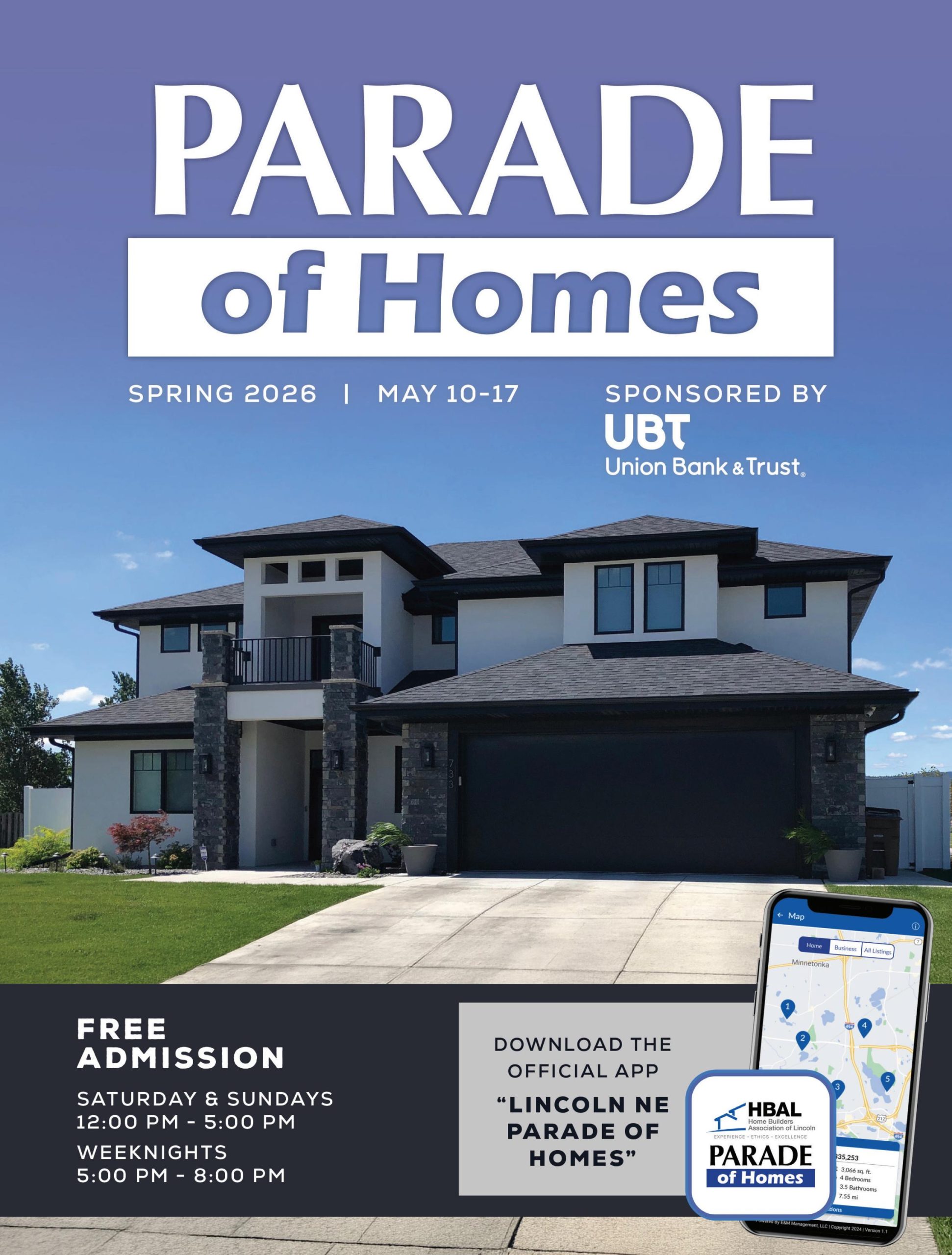
Lincoln Parade of Homes 2026: What to Watch For If You’re Thinking About New Construction
Every spring, right around the time the trees fill in and the evenings start to stretch a little longer, Lincoln’s Parade of Homes gives people a chance to do something that feels both practical and fun: step inside brand-new homes and imagine what life might look like in a different space.
This year, the 2026 Spring Parade of Homes begins on Mother’s Day, Sunday, May 10, and runs through Sunday, May 17. Homes will be open weeknights from 5:00 p.m. to 8:00 p.m. and Saturday and Sunday from 12:00 p.m. to 5:00 p.m. Admission is free, which makes it an easy way to explore new construction without pressure or commitment.
The event is organized by the Home Builders Association of Lincoln, and each spring and fall it gives the public an opportunity to walk through new homes and meet the builders behind them. This year’s Parade includes dozens of entries across Lincoln and nearby communities, with homes in areas such as Wilderness Heights, Yankee Hill Estates, Rokeby Ridge, Jensen View Estates, South Lake, Prairie Meadows, NuMark Estates, Fire Ridge, Wandering Creek, Hillcrest, White Horse, Grandview Estates, and more.
For anyone thinking about building, buying new, or simply understanding what today’s buyers are drawn to, the Parade can be more than a weekend outing. It can be a helpful first step toward clarity.
Why the Parade of Homes Is Worth Visiting
New construction can feel exciting from a distance. The clean finishes, fresh paint, open kitchens, large windows, and untouched surfaces all have a way of drawing people in.
But once you walk through several homes in person, you start noticing more than just what looks pretty.
You notice how the morning light might fall across a kitchen island. You notice whether the drop zone is actually large enough for daily life. You notice if the pantry is tucked in a convenient place or if the primary suite feels private enough. You notice how the garage connects to the house, where guests would gather, and whether the outdoor space feels usable.
That is where the Parade becomes useful.
It lets you compare floor plans, finishes, neighborhoods, builders, and price points in real time. The official “Lincoln NE Parade of Homes” app also allows visitors to browse Parade entries, save favorites, get directions, and view the official guidebook.
What to Pay Attention to as You Tour
If you are thinking about new construction in Lincoln, it helps to walk through each home with a few quiet questions in mind.
- How does the floor plan actually live?
A home can be beautiful and still not fit your daily rhythm. As you walk through, think about how you would move through the space on a normal weekday.
Where would groceries land?
Where would coats, shoes, bags, or pet supplies go?
Is there enough storage where you need it most?
Does the kitchen connect naturally to the living and dining areas?
Sometimes the best floor plan is not the biggest one. It is the one that makes daily life feel easier.
- What is included, and what is an upgrade?
Model homes and Parade homes are meant to inspire. That is part of the fun. But if you are seriously considering building or buying new construction, it is important to understand which finishes are standard and which ones add cost.
Cabinetry, countertops, appliances, flooring, lighting, fireplaces, tile, trim packages, landscaping, and basement finishes can all change the final number.
As you tour, make a simple note:
Love it. Need it. Nice, but optional.
That small filter can help you stay grounded when the possibilities start to stack up.
- How does the neighborhood feel?
New construction is not just about the home. It is also about the setting.
Some neighborhoods feel quiet and tucked away. Others feel more open, active, and still in development. Some have larger lots, walking paths, nearby amenities, or future phases that may shape the feel of the area over time.
As you drive between Parade homes, pay attention to what is around the house, not just what is inside it. The streets, lot placement, views, nearby homes, and future construction all matter.
- What timeline would actually work for you?
Buying or building new construction often involves more moving parts than a traditional resale purchase.
You may need to think through financing, lot availability, builder timelines, selections, contingencies, rate locks, current home sale timing, and temporary housing if the dates do not line up neatly.
That does not mean new construction has to be stressful. It simply means the plan matters.
The biggest question is often not, “Do we like this house?” It is, “How would we get from where we are now to where we want to be without creating unnecessary pressure?”
- How does new construction compare to resale?
New construction offers clear advantages: modern layouts, energy efficiency, current finishes, less immediate maintenance, and the chance to choose certain details.
Resale homes can offer different advantages: mature landscaping, established neighborhoods, finished basements, window treatments, fencing, and sometimes more predictable costs.
The right choice depends on your timeline, budget, lifestyle, and tolerance for decisions.
The Parade of Homes is a helpful place to compare both paths. Even if you do not end up building, you may leave with a clearer sense of what matters most in your next home.
Before You Go: Make a Simple Touring Plan
Before heading out, download the official Parade app, choose a few homes that fit your interests, and group them by area so you are not driving back and forth across town. The HBAL Parade page notes that the app can help you browse homes, save favorites, get directions, and access the guidebook.
Bring comfortable shoes, take notes, and snap photos only where allowed. After the first few homes, they can start to blur together. A simple note like “great pantry,” “too open,” “loved the natural light,” or “ask about lot cost” can be very helpful later.
Most importantly, give yourself permission to observe before deciding.
Sometimes the best thing a Parade weekend gives you is not an answer. It is a clearer question.
Thinking About New Construction in Lincoln?
The Lincoln Parade of Homes is a wonderful way to gather ideas, meet local builders, and see what is happening in new construction across the area.
And if you find yourself wondering how one of these homes, neighborhoods, or builders might fit your actual timeline, budget, or current home situation, that is where a calm conversation can help.
You do not have to decide anything right away.
Sometimes it simply helps to walk through the options with someone who understands the market, the process, and the little details that are easy to miss when everything looks new. I am just a call, text, or email away.
Should You Stay or Sell in South Lincoln? A Thoughtful Guide for 68516 Homeowners

There is a certain kind of real estate question that shows up quietly.
Not in a dramatic way. Not always after a major event. Sometimes it appears in the middle of ordinary life — after another weekend of home projects, after one more conversation about storage or stairs or unused rooms, after noticing that the house you once grew into may not fit in quite the same way anymore.
For many homeowners in Wilderness Hills, Edenton North, Edenton South, Southern Hills, Williamsburg, Pine Lake, and nearby south Lincoln neighborhoods, the question is not always, Are we moving right now?
It is more often this:
Does this home still make sense for the life we are living now?
That is a more thoughtful question, and usually a more useful one.
In this part of Lincoln, people tend to think carefully before they make a move. These are neighborhoods where lifestyle matters, where people have often invested significantly in their homes, and where decisions tend to be made with intention. The process is rarely about panic. It is more often about alignment — between your home, your equity, your routines, and whatever season of life is beginning to take shape.
For some homeowners, staying is the right answer.
That does not mean settling. It does not mean ignoring the question. Sometimes staying is the most strategic choice available. Maybe your location still fits beautifully. Maybe your mortgage position is strong. Maybe a few smart updates would make the home work much better for the next few years. Staying can be a decision made from clarity just as much as moving can.
For others, the conversation starts to shift toward right-sizing.
That can mean less upkeep, fewer rooms to manage, a more accessible layout, or simply a home that feels easier to live in. Often, right-sizing is not about giving something up. It is about making space for a different kind of ease. Still, it is rarely just a financial decision. A home holds history. Patterns. Family life. Even when the next move makes sense on paper, it can still feel emotional in practice.
Then there are homeowners considering a move up.
That path often comes with excitement, but also complexity. Selling one home while preparing for another means thinking through timing, budget, presentation, and what kind of move would truly improve day-to-day life. In south Lincoln neighborhoods where buyers are thoughtful and expectations tend to be high, preparation matters. The strongest outcomes usually begin long before the sign goes in the yard.
And then there is waiting.
Waiting sometimes gets framed as indecision, but that is not always fair. Waiting can be wise — especially when it is intentional. Maybe you want another year to prepare. Maybe you are watching for a better moment in family life. Maybe you are not ready to make a move, but you do want to understand what your options are now so the future feels less uncertain. Waiting works best when it has structure behind it.
That is one reason I created my Stay or Go? Decision Guide.
It is designed for homeowners in south and southeast Lincoln neighborhoods who are not looking for pressure, but for perspective. It walks through four honest paths — stay, right-size, move up, or wait — so you can think through your options with a little more calm and a little more clarity.
Because the truth is, not every homeowner needs to move.
But almost every thoughtful homeowner benefits from understanding what their choices really are.
If that question has been sitting quietly in the background for you, this is a good place to begin:
Download the free Stay or Go? Guide here:
https://lp.constantcontactpages.com/cu/fQr66D1/stayorgo
No pressure. Just a clearer next step.


