

 Facebook
 X
X
 Pinterest
 Copy Link
Spring Yard Cleanups: Small May Tasks That Make Home Feel Ready Again
There is something about May that makes a yard feel possible again.
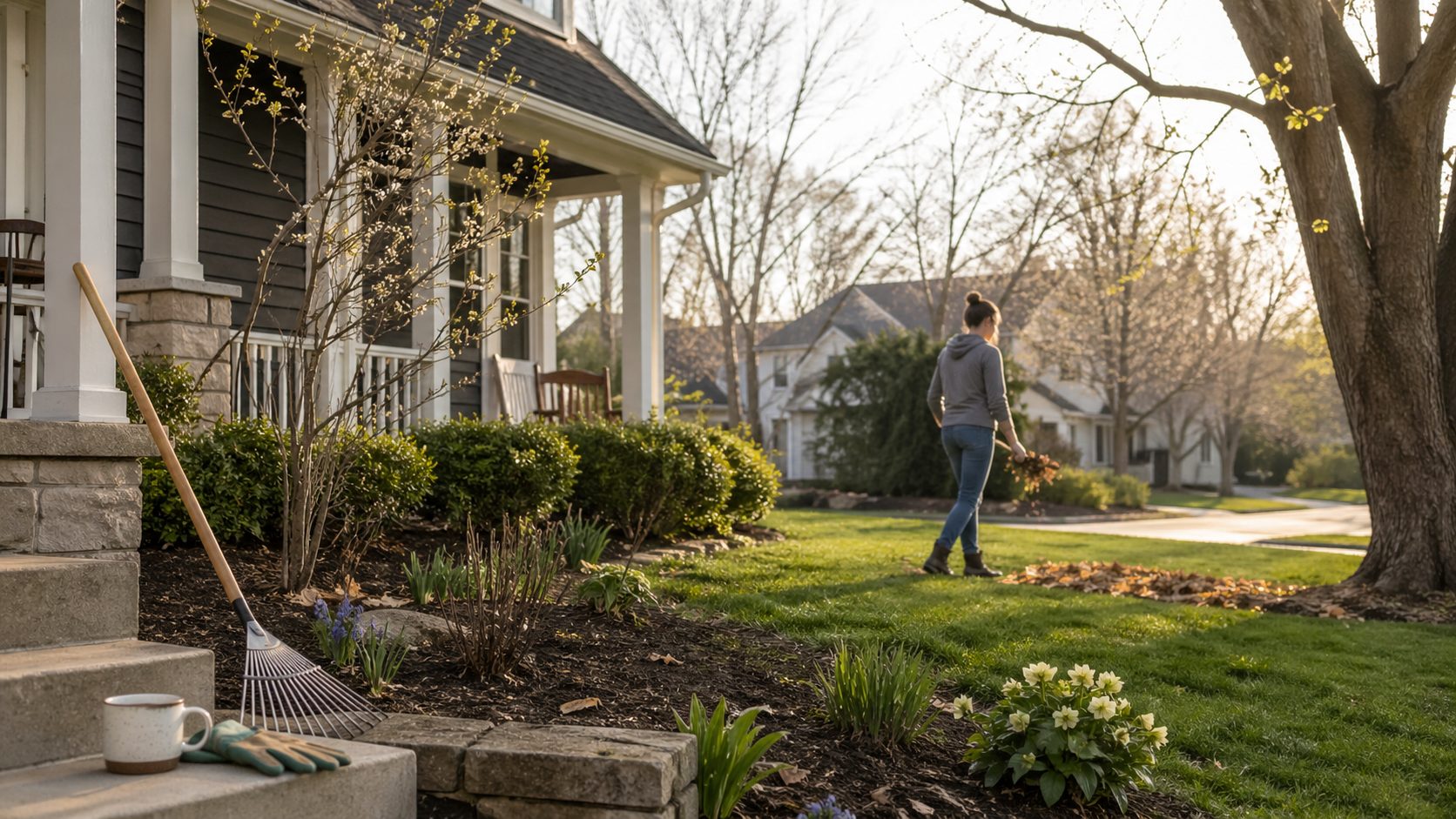
After months of gray skies, windblown leaves, bare branches, and grass that looks a little tired from winter, the smallest signs of green can feel like an invitation. The mornings are softer. The garden centers fill with color. Neighbors start wandering outside with gloves, rakes, and half-finished cups of coffee. And suddenly, the home we’ve been living inside all winter starts asking for a little attention outside, too.
Spring yard cleanup does not have to mean doing everything in one weekend. In fact, some of the best yard work starts with slowing down, walking the property, and noticing what needs care first.
Start With a Gentle Walkaround
Before pulling out every tool in the garage, take a slow walk around your yard. Look for fallen branches, matted leaves, bare lawn patches, clogged beds, damaged edging, and places where water may have settled after spring rains.
Clearing leaves, twigs, and debris helps improve air circulation and gives the lawn room to wake up after winter. Nebraska Extension also recommends checking for signs of mold or mildew and removing affected material to help prevent fungal issues.
This is also a good time to look at the practical things we sometimes forget: gutters, downspouts, sprinkler heads, hoses, outdoor faucets, and mower blades. A sharpened mower blade makes a cleaner cut, and clean tools make every job feel a little easier.
Don’t Rush Every Garden Bed
I know the temptation well. The first warm Saturday arrives, and it feels good to cut everything back and make the beds look neat again. But a gentler cleanup can be better for the garden.
Many pollinators spend the colder months tucked into leaf litter, hollow stems, and leftover plant material. The Xerces Society notes that early spring cleanup can disturb bees, butterflies, and other beneficial insects before they have fully emerged. They suggest watching for signs like reliable warm nights, actively growing lawns, and fading spring blooms before doing a full cleanup.
A practical approach is to clean in stages. Tidy the front beds first if they face the street, but leave a quiet corner or back bed a little longer. Cut back what is truly broken or unsightly, but avoid stripping everything bare at once.
Let Spring Bulbs Finish Their Work
Daffodils, hyacinths, tulips, and other spring bulbs can look a little tired once the flowers fade. It is fine to cut off the spent flower stalks, but leave the foliage until it dies back naturally. Those leaves are still feeding the bulb and helping it store energy for next year’s blooms.
It may not be the tidiest look for a few weeks, but it is one of those small acts of patience that pays off later.
Give Your Lawn a Strong, Simple Start
A healthy lawn does not always need more products. Sometimes it needs better habits.
The City of Lincoln recommends keeping grass at 3 inches or higher, because taller grass supports deeper roots, provides more shade to the soil, and helps lawns become more drought resistant. It also recommends never removing more than one-third of the grass blade at a time.
Using a mulching mower can also be helpful. Leaving fine grass clippings on the lawn returns nutrients and organic matter to the soil, and the City reminds homeowners to sweep clippings off sidewalks, driveways, and streets so they do not wash into storm drains.
Watering matters, too. Instead of watering lightly every day, water deeply and less often, preferably in the early morning. This encourages deeper roots and helps reduce runoff.
Add Color With Pollinator-Friendly Plants
May is a wonderful time to think about the parts of your yard that could use more color, texture, or movement. Native perennials are especially helpful because they can support pollinators like solitary bees, bumblebees, and butterflies.
Nebraska Extension suggests options such as coneflower, coreopsis, aster, goldenrod, butterfly milkweed, blazing star, beardtongue, bee balm, and purple poppy mallow.
You do not need to redesign the whole landscape. Sometimes one new bed, one large planter, or one sunny corner can change the feeling of the entire yard.
Be Careful With Wet Soil
Spring weather in Nebraska can turn quickly. One week feels dry and windy; the next brings rain and soft ground. If you are preparing a garden bed, avoid tilling when the soil is wet. Wet soil can form hard clods that make planting and cultivating harder later in the season.
A simple test is to squeeze a handful of soil. If it stays in a sticky ball, give it more time. If it crumbles easily, it is closer to being ready.
Keep a Simple Garden Notebook
This may sound old-fashioned, but it can be one of the most useful gardening habits. Keep a small notebook or note on your phone with what you planted, where you planted it, the variety, planting date, and how it performed.
Nebraska Extension recommends keeping garden records because they help you plan future gardens and remember what worked well — and what did not.
By August, it is easy to forget which tomato plant produced the best or which flowers handled the heat beautifully. A few notes in May can make next spring much easier.
Kathy’s Tip
When I think about spring yard work, I think less about perfection and more about readiness. A clean walkway, fresh mulch, trimmed edges, healthy lawn habits, and a few well-placed flowers can make a home feel cared for before anyone ever steps inside.
And whether you are planning to stay, preparing for a future move, or simply wanting to enjoy your home more this season, May is a good month to start small. One bed. One corner. One Saturday morning.
Little by little, the yard begins to feel like home again.


